Rectal Prolapse Repair Surgery
PROCEDURE PERFORMED BY DR ALIMIA
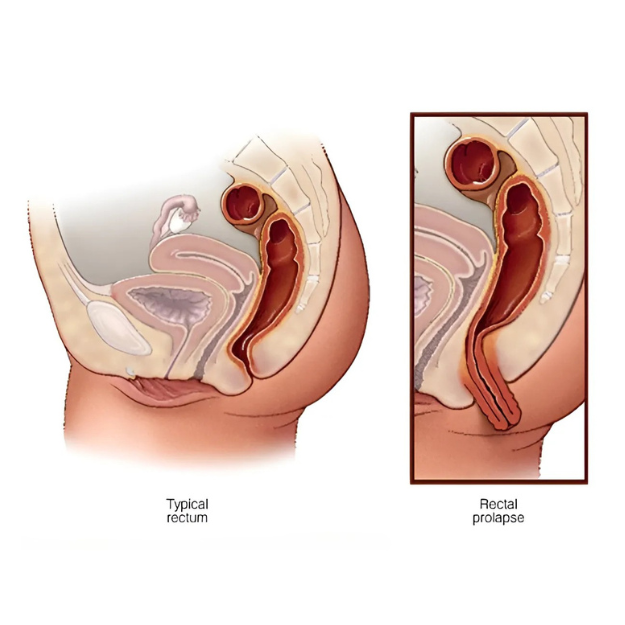
Rectal prolapse repair is a surgical procedure performed to correct rectal prolapse, a condition where the rectum (the last portion of the large intestine) protrudes through the anus. This condition can result in discomfort, incontinence, mucous discharge, and difficulty with bowel movements. Surgery is the definitive treatment, especially for full-thickness or symptomatic prolapse.
Indications for Surgery
-
Full-thickness rectal prolapse
-
Recurrent or chronic prolapse
-
Associated symptoms: fecal incontinence, bleeding, mucous discharge, constipation, or obstructed defecation
-
Failure of conservative measures
Surgical Approaches
Rectal prolapse repair can be performed via abdominal or perineal approaches. The choice of procedure depends on patient age, fitness for surgery, extent of prolapse, and surgeon expertise.
1. Abdominal Approach (via open or laparoscopic surgery)
-
Rectopexy (with or without resection):
-
The rectum is mobilized and fixed to the sacrum using sutures or mesh to prevent future prolapse.
-
Sometimes combined with sigmoid resection (resection rectopexy) if constipation is a major symptom.
-
Laparoscopic or robotic-assisted rectopexy offers a minimally invasive option with faster recovery and less postoperative pain.
-
Advantages:
-
Lower recurrence rate
-
Suitable for younger and medically fit patients
2. Perineal Approach (per-anal or perineal surgery)
-
Delorme Procedure: Mucosal sleeve resection and plication of the muscular layer – usually for shorter prolapses.
-
Altemeier Procedure (Perineal Rectosigmoidectomy): Full-thickness resection of prolapsed rectum and sigmoid with anastomosis.
Advantages:
-
Preferred in elderly or high-risk patients
-
Can be performed under spinal or local anesthesia
Postoperative Care
-
Early mobilization
-
Stool softeners to avoid straining
-
Pelvic floor physiotherapy in select cases
-
Follow-up to assess bowel function and recurrence
Outcomes
-
Most patients experience significant symptom relief.
-
Recurrence rates vary: lower with abdominal rectopexy, higher with perineal approaches.
-
Functional outcomes (continence and constipation relief) depend on pre-existing pelvic floor dysfunction.