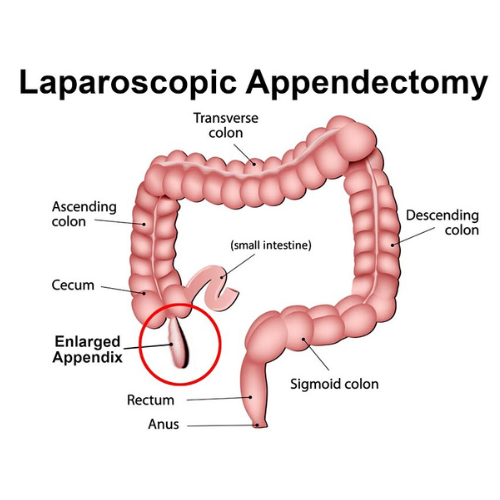
Laparoscopic Appendicectomy
PROCEDURE PERFORMED BY DR ALIMIA
Laparoscopic appendicectomy (also spelled appendectomy) is a minimally invasive surgical procedure for the removal of the vermiform appendix, most commonly performed to treat acute appendicitis—an inflammation of the appendix that can lead to perforation, abscess, or peritonitis if not treated promptly.
Procedure Overview
The operation is performed under general anesthesia. Using three small incisions, a laparoscope (camera) and specialized instruments are introduced into the abdominal cavity:
-
The appendix is identified, isolated, and mobilized.
-
The mesoappendix (containing the appendiceal artery) is ligated or cauterized.
-
The base of the appendix is securely divided using sutures, staplers, or loop ligatures.
-
The appendix is removed via one of the port sites.
Indications
-
Uncomplicated acute appendicitis
-
Perforated or gangrenous appendix
-
Interval appendicectomy after non-operative management of an appendiceal abscess
-
Diagnostic purposes in unclear cases of lower abdominal pain
Advantages of the Laparoscopic Approach
-
Shorter hospital stay
-
Reduced postoperative pain
-
Smaller scars with better cosmetic outcomes
-
Faster return to daily activities
-
Lower incidence of wound infections
-
Better visualization of the abdominal cavity, which is particularly useful in:
-
Uncertain diagnosis
-
Obese patients
-
Female patients with potential gynecological differential diagnoses
-
Postoperative Recovery
Most patients recover rapidly, often being discharged within 24 hours. Complications are uncommon but may include:
-
Wound or intra-abdominal infection
-
Bleeding or hematoma
-
Bowel injury (rare)
-
Intra-abdominal abscess (more likely in perforated cases)
Clinical Relevance
Laparoscopic appendicectomy has become the standard of care for the surgical treatment of appendicitis in many centres worldwide. It is especially valuable in patients where the diagnosis is uncertain, or where a less invasive approach is desired.