Chemo port placement
PROCEDURE PERFORMED BY DR ALIMIA
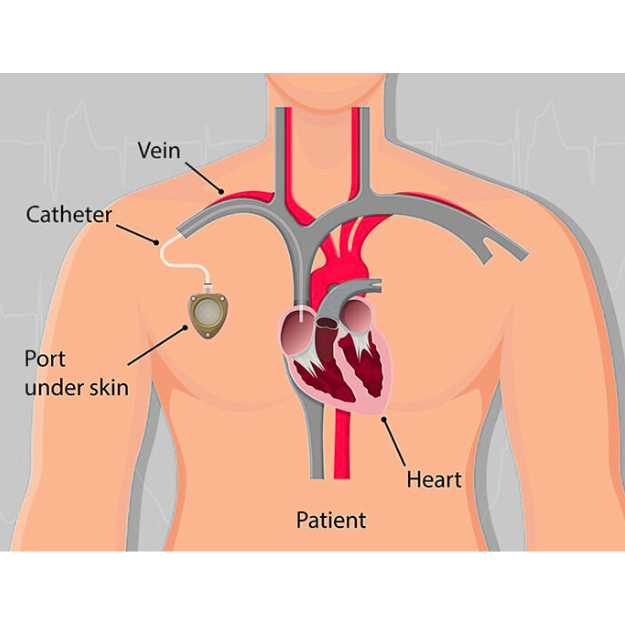
A chemotherapy port, or chemo port, is a small device, roughly the size of a coin, that is placed just under the skin — usually in the upper chest, but sometimes in the arm or abdomen. It’s connected to a large vein by a thin, flexible tube.
Chemo ports are commonly used during cancer treatment and make it easier to receive medications, fluids, blood draws, and injections. By reducing the number of needle sticks, they help make chemotherapy safer, more efficient, and a bit more comfortable for patients.
A chemo port (also called a port-a-cath) is a small medical device placed under the skin, usually in the chest, to make receiving chemotherapy and other treatments easier and more comfortable.
Why is it used?
Chemotherapy can irritate veins if given through regular drips. A chemo port gives direct access to a larger vein, making it:
-
Easier to give treatment
-
Less painful than frequent needle sticks
-
More reliable for long-term therapy
How is it placed?
-
The procedure is done in theatre, usually under local anaesthetic with sedation or sometimes general anaesthetic.
-
A small cut is made in the chest to place the port just under the skin.
-
A thin tube (catheter) is connected to the port and guided into a large vein.
-
The skin is closed with stitches and covered with a small dressing.
After the procedure:
-
You can usually go home the same day.
-
The area may feel sore for a few days.
-
The port is not visible under clothing but can be felt as a small bump.
-
It’s cleaned and accessed with a special needle during treatment sessions.
The port can stay in for weeks or months, depending on your treatment plan, and is removed once no longer needed.