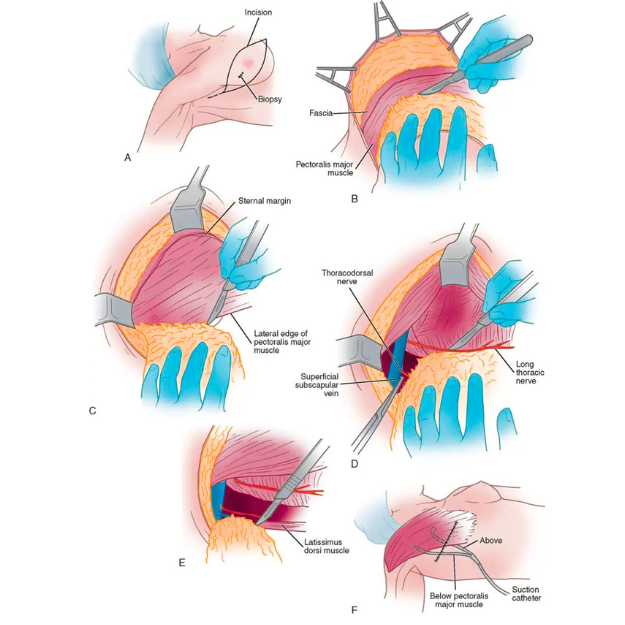
Breast Cancer Surgery
PROCEDURE PERFORMED BY DR ALIMIA
If you’ve been diagnosed with breast cancer, your doctor may recommend surgery to remove the cancer and prevent it from spreading. Surgery is often one of the main treatments for breast cancer and may be combined with other treatments like radiation, chemotherapy, or hormone therapy.
The type of surgery you need depends on:
-
The size and location of the cancer
-
Whether it has spread
-
Your breast size
-
Your personal preference and overall health
Types of Breast Cancer Surgery
There are two main types of breast surgery for cancer:
1. Breast-Conserving Surgery (Lumpectomy or Wide Local Excision)
-
Only the cancer and a small area of healthy tissue around it are removed.
-
The rest of the breast is left intact.
-
Usually followed by radiation therapy to kill any remaining cancer cells.
-
Suitable for early-stage cancer or smaller tumors.
2. Mastectomy
-
The entire breast is removed, sometimes along with nearby lymph nodes.
-
Recommended for:
-
Larger or more widespread cancer
-
Multiple cancer areas in the same breast
-
Some high-risk patients or personal choice
-
There are several types of mastectomy, and your doctor will explain which one is most appropriate.
Lymph Node Surgery
Often done at the same time as breast surgery to check if the cancer has spread:
-
Sentinel Lymph Node Biopsy: Only the first few lymph nodes (called “sentinel” nodes) are removed and tested.
-
Axillary Lymph Node Dissection: More lymph nodes are removed if cancer is found in the sentinel nodes.
Reconstruction Options
If you have a mastectomy, you may choose to have breast reconstruction to rebuild the shape of your breast:
-
Can be done at the same time as your mastectomy (immediate reconstruction) or later (delayed reconstruction)
-
Options include using implants or tissue from your own body
-
Some people choose not to have reconstruction, which is also a valid and personal choice
Your surgeon and care team will support whatever choice is right for you.
What to Expect After Surgery
-
You may have pain, swelling, or bruising for a few days
-
You might go home the same day or stay in hospital for a short time
-
A drain may be placed temporarily to remove fluid
-
Gentle arm exercises will be recommended to help healing and movement
-
Most people return to normal activities in a few weeks, but full recovery may take longer
Risks and Side Effects
As with any surgery, there are some risks, such as:
-
Infection
-
Bleeding
-
Scarring
-
Numbness or stiffness in the arm or chest
-
Lymphedema (swelling in the arm if lymph nodes are removed)
Your care team will help you manage any side effects.
Will I Need More Treatment?
Yes, you may need other treatments after surgery, such as:
-
Radiation therapy
-
Chemotherapy
-
Hormone therapy
-
Targeted therapy
Your treatment plan will be tailored to your type of breast cancer and overall health.
Final Thoughts
Breast cancer surgery is a big step, but you’re not alone. Your doctors, nurses, and support team are here to help you through every part of the process. Talk openly with your team, ask questions, and take time to make the decisions that feel right for you.