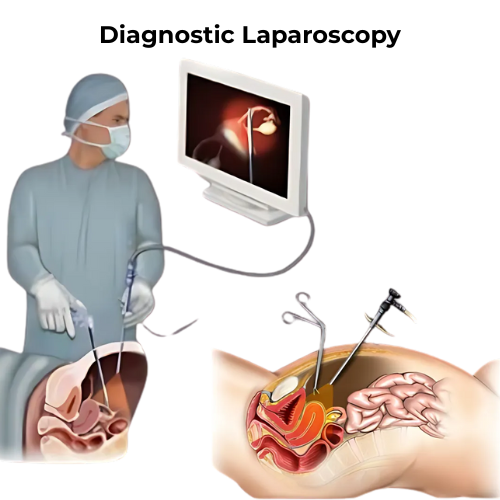
Diagnostic Laparoscopy
PROCEDURE PERFORMED BY DR ALIMIA
Diagnostic laparoscopy is a minimally invasive procedure that allows direct visual inspection of abdominal and pelvic organs. It’s used to investigate unexplained pain, infertility, or conditions like endometriosis. Performed under general anaesthesia using a small camera (laparoscope), it offers accurate diagnosis with faster recovery and fewer risks than open surgery.
Overview:
Diagnostic laparoscopy is a minimally invasive surgical procedure used to visually examine the organs within the abdominal and pelvic cavity. It is typically performed when the cause of symptoms such as abdominal pain, infertility, or unexplained findings on imaging cannot be determined through non-invasive tests.
Procedure:
The procedure is performed under general anaesthesia. A small incision is made near the navel, through which a laparoscope (a thin, lighted tube with a camera) is inserted. This allows the surgeon to view the abdominal organs in real-time on a monitor. Additional small incisions may be made to allow for better visualisation or the insertion of surgical instruments, if needed.
Clinical Uses:
-
Investigating causes of chronic or acute abdominal pain
-
Assessing infertility or pelvic pain in women
-
Detecting endometriosis, adhesions, fibroids, or ovarian cysts
-
Evaluating abdominal masses, liver disease, or cancer staging
-
Identifying causes of unexplained internal bleeding or infection
Post-Procedure:
Patients typically recover quickly, with most able to go home the same day. Mild discomfort, bloating, or shoulder-tip pain (from residual gas used to inflate the abdomen) is common but short-lived.
Risks and Complications:
While generally safe, risks may include:
-
Bleeding or infection
-
Injury to internal organs (e.g. bowel, bladder, blood vessels)
-
Adverse reaction to anaesthesia
-
Formation of adhesions (scar tissue)
Conclusion:
Diagnostic laparoscopy is a valuable tool that allows for direct visual assessment of intra-abdominal pathology, often leading to more accurate diagnoses and facilitating prompt treatment planning. It offers minimal recovery time compared to open surgery and is widely considered a safe and effective diagnostic option.